


The Soul of the Wooden Skis
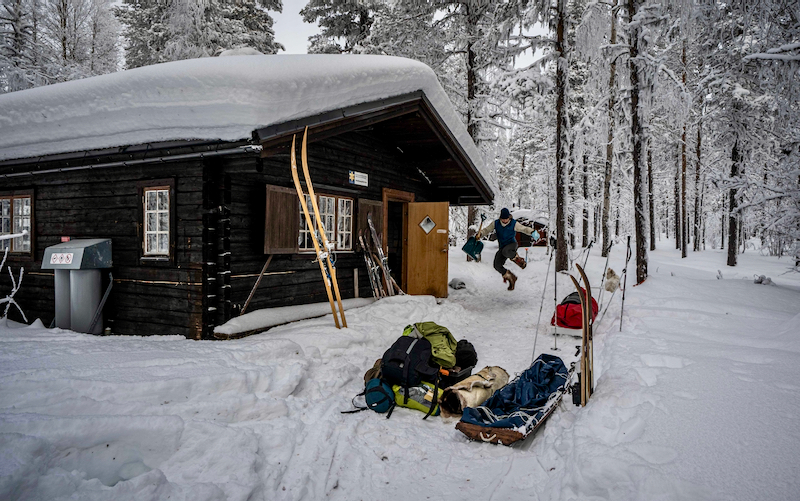
Have you ever tried gliding on wooden skis through a silent, snowfilled forest during midwinter? If so, you have experienced something truly special. The first wooden skis were made from solid pieces of birch or spruce. They were primarily used not for pleasure, but as a means of transportation for long winter journeys, hunting, and fishing. In the village of Kalvträsk outside Skellefteå in northern Sweden, a pair of wooden skis was found in a bog in 1924. They were dated to be 5,200 years old and testify to the significance that wooden skis have had for people in the north for thousands of years.
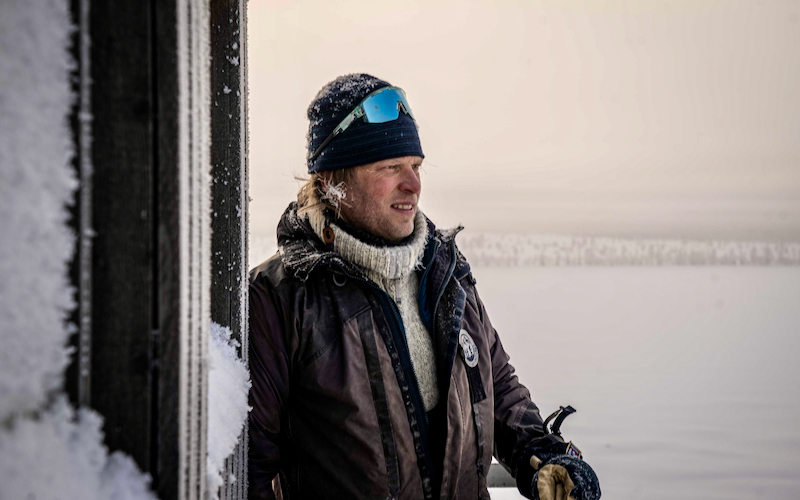
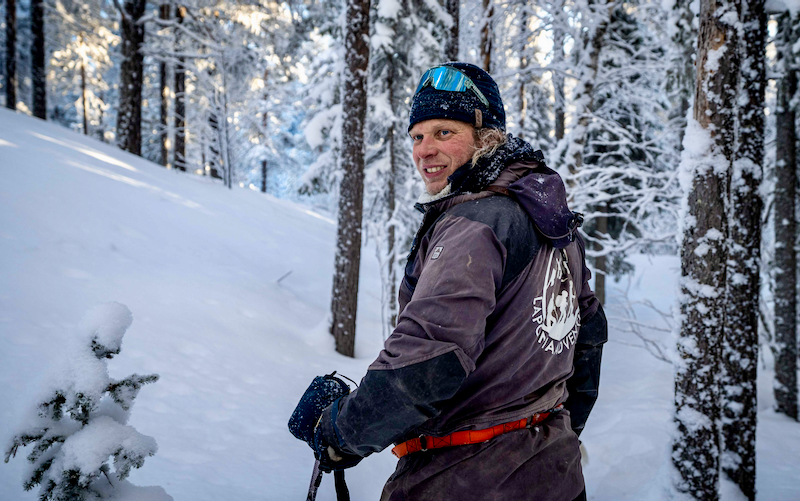
Today, choosing a wide wooden ski over a modern version with steel edges may seem old-fashioned, but those who have tried it are hooked. Meet Christian Heimroth, one of the founders of Laponia Adventures, who is an enthusiastic advocate for skiing the traditional way.
What is the advantage of wooden skis?
– It is the ability to travel easily in deep snow during winter. I find that they carry you better than a regular plastic touring ski. They work a little differently; it’s not about pressing down the camber since they are skis designed for use in powder snow, thus you don’t need the same grip. They are longer and wider; mine are 280 cm long. Wooden skis can come in different widths; narrower skis glide better, but wider skis carry better. Those who use wooden skis for hunting often prefer a slightly shorter ski to easily go between trees. My skis, a pair of Östergren skis, are best suited for more open forest landscapes.
It is the ability to travel easily in deep snow during winter
– You also don’t need to wax a wooden ski. If you do, you will keep sliding backwards when you ski. Instead, you can tar them in the spring, which provides both glide and grip. Preferably after the season ends. Then you put pine tar on them and leave them in the spring sun for a few weeks, so the tar can be warmed into the wood fibers by the sun.
When do you use wooden skis?
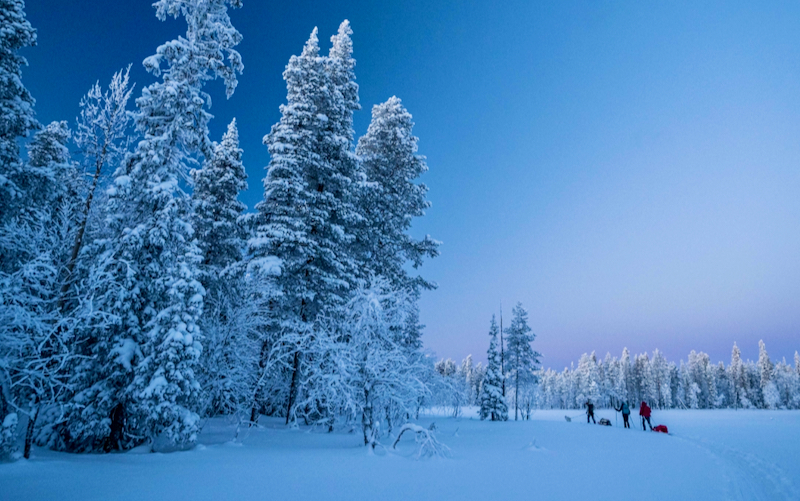
– They are made to be used in cold temperatures and powder snow. I mainly use mine for day trips in the forest during midwinter and on our wintertours in Muddus National Park. You have to be careful not to use them in the wrong conditions. If it’s around zero degrees celsius, they can get really sticky and pack snow underneath, as the wood fibers make the ski wet. Icy tracks wear down the fibers in the skis. And of course, there are no metal edges, so you can easily slip around on icy snowmobile tracks, for example.
Do you have recommendations for manufacturers or bindings?
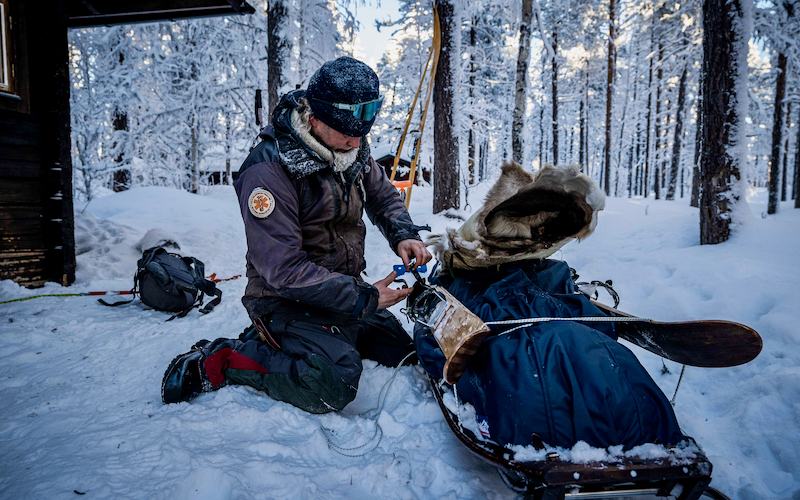
– You can use a boot binding and in that way be able to use any boot as a ski boot, which is an advantage. Of course, you can also put on an ordinary binding, like a BC binding. The old Samí way is to put just a loop on the ski and use with beaked shoes made of leather or nuvtagas (samí for fur shoes, editor’s note).
– The manufacturers that exist in Sweden are Tegsnäs, Olskogen, the old military ski Vita Blixten which you might be able to get a hold on. Also the Sundberg ski. Bo Östergren made my skis, they are called Östergrenare. But he has retired.


Finally, what do you think is the best thing about wooden skis?
– They are beautiful and they belong in the forest. It would feel completely wrong for me to use plastic skis in Muddus National Park. It should be genuine stuff, like an axe with a wooden handle. Function is one thing, but the feeling of gliding through deep snow on wooden skis is hard to beat. Also, it is very beautiful to lean a pair of wooden skis against a pine tree or a cabin in the forest.
Text: Cathrin Larsson
Quick facts wooden skis
- The English word ‘ski’ comes from the Old Norse ‘skíð’, which means ‘split wood’ or ‘wooden stick’.
- The Samí people were among the first people to develop and use wooden skis.
- The Kalvträsk ski is the oldest ski in the world, dated 5200 years old.
- Wooden skis should be considerably longer than a regular ski. The longer the ski, the more important it is that it curves upward at both the front and back, so that it is easy to go backward if you can’t turn around.
- Wooden skis work just as well for beginners as for experienced skiers.
Links wooden skis
Making Traditional Scandinavian Wooden Skis
Träskidor – tillverkning igår och idag | Längdskidåkning.se
Are you dreaming about a ski tour on wooden skis?

Midwinter ski tour in Muddus – 7days
Ski in the forest of Muddus National Park staying in cozy forest cabins. Unsupported tour where we all help to pull sledges with common food and equipment.

Skiing in the forest
The north of Sweden is covered by snow for half of the year and skiing has always been an important way of traveling. Join us on a ski trip on traditional wooden skis, exploring the snow-covered forest just outside Jokkmokk. No previous experience from skiing required. We cook and have lunch together around the fire.

Rent wooden skis and go out on your own
Discover the forests outside Jokkmokk and Gällivare on wooden skis
Do you have any questions?
If you have any questions or don’t find what you are looking for.
Send an email to info@laponiaadventures.com
We are happy to help and will answer you as soon as we can.