


How to dress for a successful winter tour
What clothes you need to bring on a winter tour – and what you can leave at home
Are you going on a tour in the mountains this winter? Maybe you’re at home wondering how many pairs of socks to bring or which jacket will be the best choice? You need to think ahead when you don’t have the opportunity to wash or dry clothes during the week. At Laponia Adventures, we share our best packing hacks – and what you can safely leave at home.
Next to the skin
The material of your clothing can be debated endlessly. But many agree that a really good base layer in merino wool is unbeatable. It doesn’t smell after many days on the tour and it provides comfortable, natural warmth, even if you sweat. Synthetic works but will smell more and feel unpleasant when wet. Avoid cotton, as it absorbs sweat and provides poor warmth. Usually, one base layer for skiing and one for sleeping is enough for a week. If you really want to be on the safe side, pack a third one.
The material of your clothing can be debated endlessly.
The same as above applies to underwear. And hey, leave that extra pair of underwear at home – you won’t be changing as often as you think… Two or at most three sets are more than enough. Socks are also a topic for discussion. Here, wool is absolutely the way to go for happy feet. You might wear just one layer, or you might need two layers to avoid blisters. Make sure to have a few extra pairs. In this case it’s the opposite; socks get wet easily and won’t dry during the whole week. Whatever happens, make sure you always have a dry pair of socks to sleep in.
Mid-layers
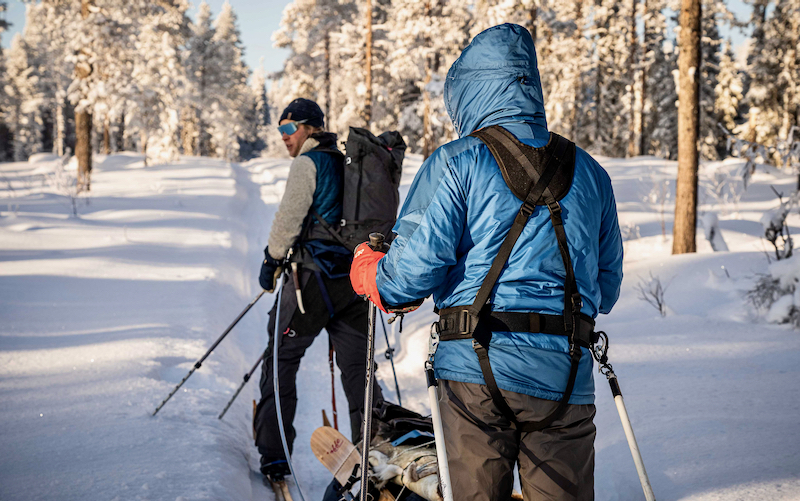
Here you can be a bit more flexible with your choice of material. The main thing is that it insulates well against the cold. Maybe you’ll choose an old wool sweater that will keep you warm no matter what happens. Or perhaps a lighter synthetic garment, like a fleece. A thinner down or synthetic jacket or vest is also useful. But don’t bring too many layers, one or two mid-layers are enough. And don’t forget the lower body! A pair of fleece or wool shorts can be just what you need. There are versions with zippers if you want to be able to take them off easily.
Outer layer
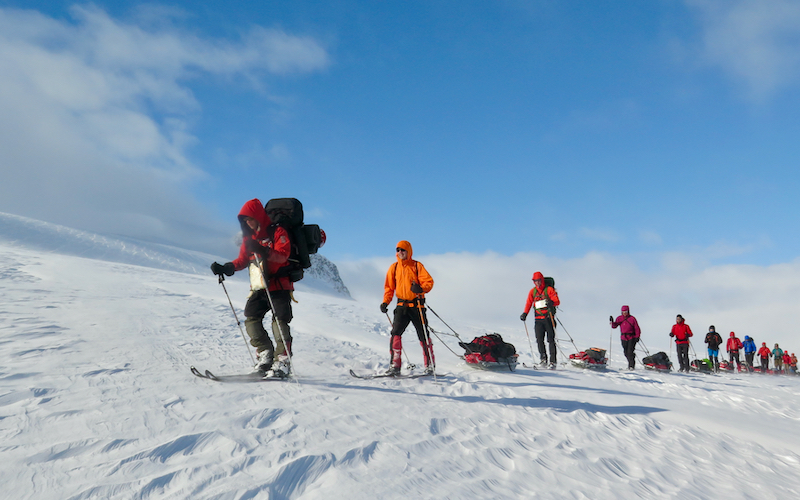
Shell clothing is a must! Both a shell jacket with a good hood and collar, and shell pants. Both preferably with zippers so you can ventilate on warm ski days. The weather can change, and there’s nothing worse than getting wet on a winter trip. Thin shell garments usually don’t absorb moisture, they are lightweight and provide reliable protection against rain and wind. If sunnier days are expected on your trip, or if you tend to get warm easily, it can be nice to have a windbreaker to ski in.
Insulation
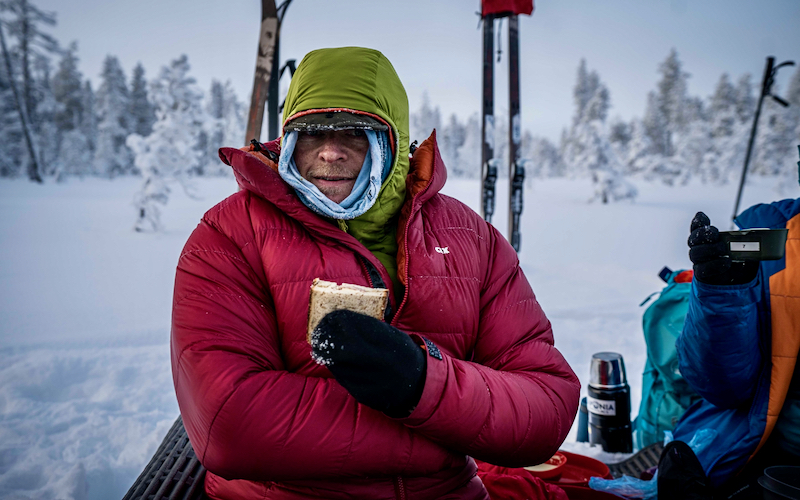
A really thick insulated jacket in down or synthetic is a lifesaver on a tour in the mountains, literally. Down or synthetic? If you have the option to choose, check the weather forecast. If it’s going to be mild and maybe even rainy, synthetic is the best choice as it keeps you warm even if it gets wet. If it’s going to be really cold, choose down instead. Also think about the lower body! A pair of shorts or pants in down or synthetic to pull over your shell pants is a key garment on a winter trip.
Head and hands
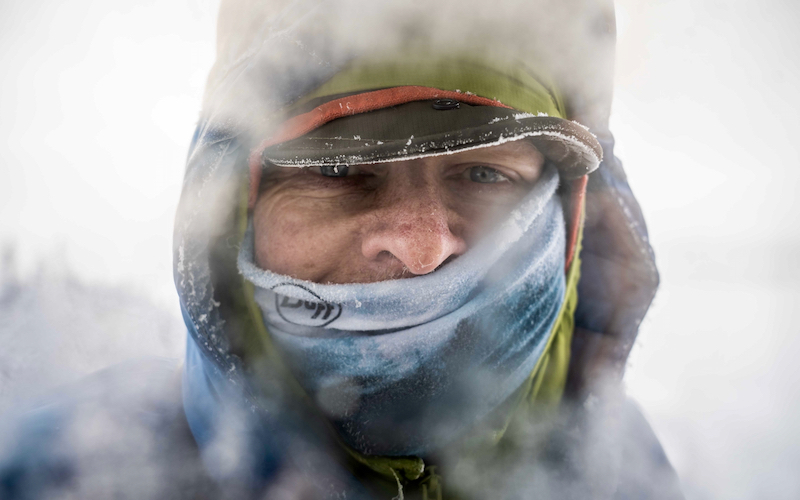
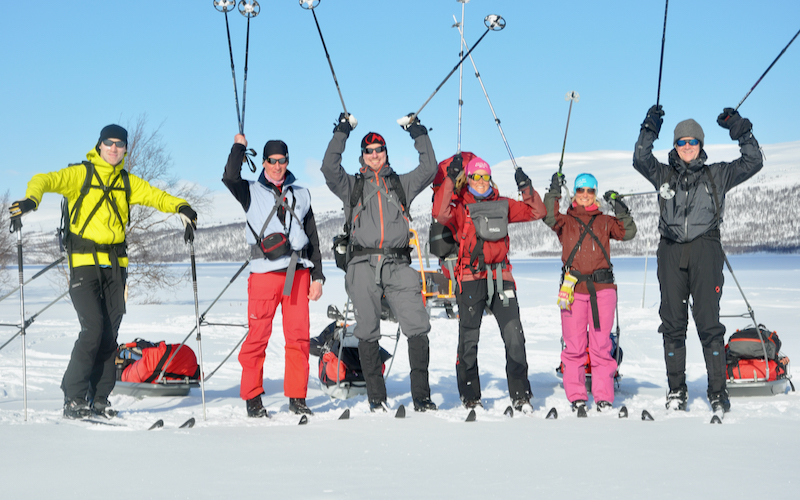
One or two hats are important. A warm hat to wear at camp and when you sleep, and a thinner one for skiing. Or maybe you prefer to use a headband or buff instead while skiing? A buff, scarf, or balaclava is also incredibly nice to have around your neck when the wind blows. If it looks like it will be a sunny week, a cap can also be nice.
A bonus if you’re going to be doing a lot of cooking, handling cameras, or other delicate tasks is to bring wrist warmers.
When it comes to gloves, it is incredibly individual how many pairs you need and how warm they should be. Here, you need to experiment a bit. Expect that you will need at least three pairs of gloves. One thinner pair, perhaps fleece or windproof for skiing. One pair of shell gloves with liners, maybe both a thin and thick liner. And one pair of really thick mittens that must never get wet and are kept as a backup. Gloves are easily lost in the winds. Plan to use the thick mittens on really chilly evenings, not for skiing. A bonus if you’re going to be doing a lot of cooking, handling cameras, or other delicate tasks is to bring wrist warmers.
That said, we hope you feel a little more confident about what you need to bring on a trip and what you can leave at home!
Text: Cathrin Larsson
Quick facts Clothing on a winter tour
- Try on everything you plan to wear to make sure it fits and feels comfortable on your skin beforehand. There is nothing worse than clothing that pinches, rubs, or itches on a winter trip. It hinders blood circulation, which is needed to keep you warm. It’s also a good way to see if anything needs repairing.
- It is possible to rent shell and down clothing if you don’t have your own.
- If any clothing gets wet, you can try to dry it on your body. Gloves and socks can be hung inside the waistband of your pants. Alternatively, they can be placed over a warm Nalgene bottle so that the moisture evaporates. A damp base layer shirt (note: damp, not soaking wet!) can be dried on your body over a dry base layer shirt while you are at the camp. A wet buff that you have worn around your neck can be placed over the hat you are wearing on your head so that body heat can help it dry.
Länkar Klädsel
Would you like to go winter camping?

Join one of our ski tours in Sarek
If winter camping is relatively new to you, maybe you would feel more relaxed going with a guide. Every year we offer at least one winter camping tour, often more than one.

Rent tents, sleeping bags and much more from us
Rent what you don’t have for a successful winter tour
Do you have any questions?
If you have any questions about how to rent camping equipment or don’t find what you are looking for.
Send an email to info@laponiaadventures.com
We are happy to help and will answer you as soon as we can.