


How to choose Nordic Touring skis
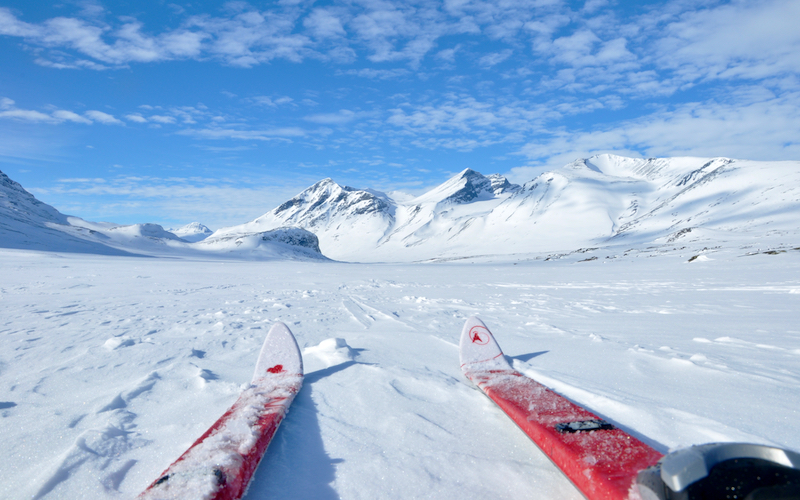
Is it time for new Nordic touring skis (turskidor), but you’re not quite sure what you want? Below, we list a few things to consider to make your ski purchase easier.
Waxless skis or not?
This is a matter of personal preference and something that can be debated for a long time, as there are pros and cons to both options. A waxless ski doesn’t need to be waxed before each use, only occasionally to prevent it from drying out. Simple and quick, in other words. It has “fish scales” on the underside under the flex of the ski to provide grip in the snow. The downside is that when skiing downhill, the “fish scales” can slow you down a bit, as they create some resistance in the snow. After long periods of use, you may also notice them fading and wearing down. Generally, you’ll have decent grip in most snow conditions, but you can’t optimize it in the same way as with a ski that requires waxing.
This is a matter of personal preference and something that can be debated for a long time, as there are pros and cons to both options
Skis that need waxing have the advantage that if you wax them correctly, you get perfect grip and glide. However, learning the art of waxing can be difficult. Additionally, it takes extra time in the morning before heading out, and you need to bring wax with you on trips.
Steel edge or not?
If you have a dog, skis without steel edges are recommended, so that you don’t risk injuring the dog if you accidentally run over its paws. Otherwise, we recommend a steel edge, as it makes the ski easier to handle and gives a better grip on hard snow and icy conditions.
Width and waist?
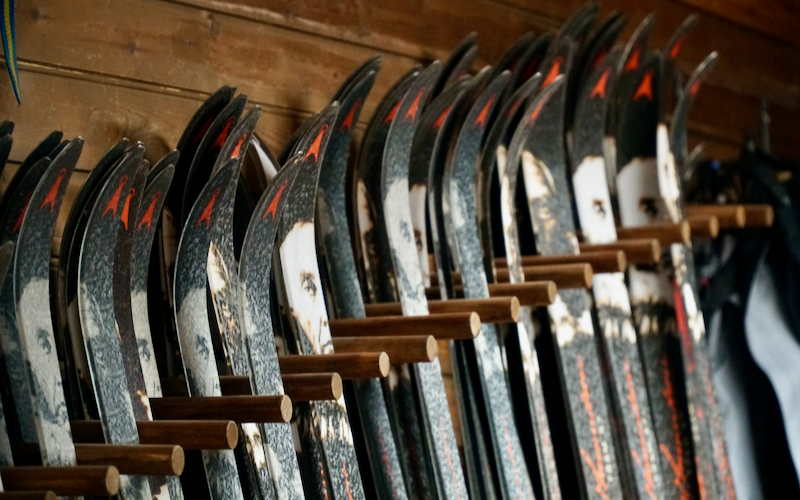
Some skis have a more narrow waist and are easier to turn. This can be good if you enjoy a more playful ride up and down the mountains. However, if you’re going on a long tour, mostly skiing on flat terrain and pulling a pulka, a straight model is preferable as it is more stable and forward-moving. The same applies if you also want to be able to ski in prepared cross-country tracks with your touring skis – in that case, consider choosing a straight, slightly narrower model.
Some skis have a more narrow waist and are easier to turn.
Which binding should I choose?
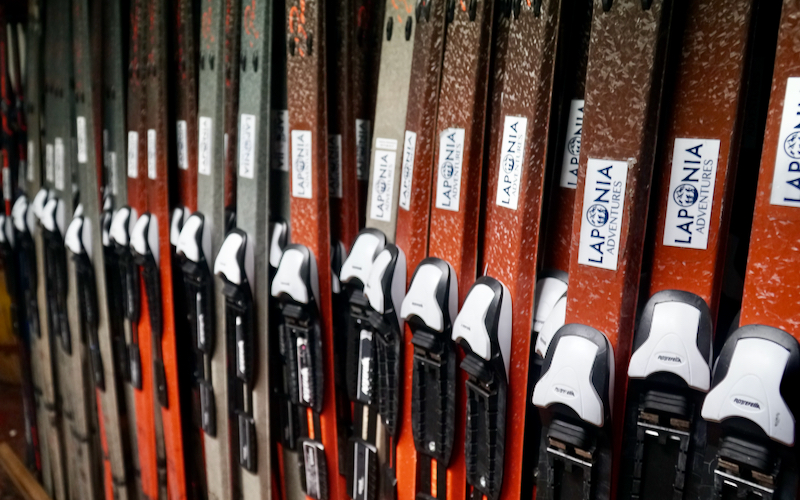
We recommend choosing a slightly stronger binding than a regular cross-country binding, as the one for cross-country skiing can be too weak and may break during long days of use. A BC binding is what we use ourselves on our touring skis; it is common, popular, and durable enough for most purposes. For that binding, you need a BC boot, which has a metal bar at the toe, slightly wider than on cross-country skis.
The Nordic norm 75 mm system also exists and has been around for a long time. For that, you need a ski boot with a lip that has three holes underneath it, which you clamp on. It’s a very stable and durable binding. Instead, it tends to be the lip on the boot that breaks after many years of use.
In recent years, there is also the Rossignol Explore, a lightweight, simple binding that is robust. It has a heel riser and is especially recommended for off-piste tours. For that, you need an Explore boot, which has two pins on each side of the toes. It is slightly wider than the BC binding, designed to fit on a wider ski with more waist width.
Climbing Skins
Having one or two pairs of climbing skins for your touring skis is not a bad idea. No matter what type of skiing you plan to do, they are almost always necessary. If you want to go uphill and downhill, we recommend full-length climbing skins so you don’t slide backwards. The same applies if you are pulling a very heavy pulka or pulling a pulka uphill.
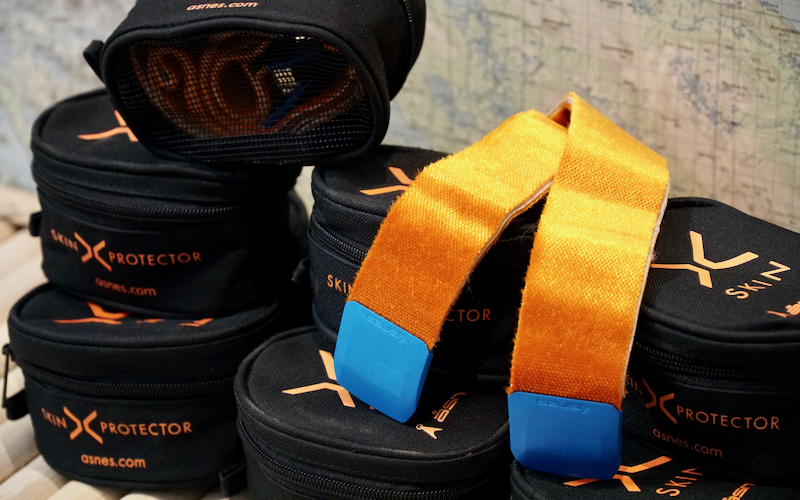
Short climbing skins are sold, among others, by Åsnes. The skis then have two attachment points in the middle, above the foot, so that you can attach the climbing skin just under the ski’s flex. They are very useful if you are pulling a pulka, want to go slightly uphill, or if the conditions are very icy and slippery.
When it comes to the material of the skins, there is mohair, nylon, and a mix of both. Mohair glides better but wears out faster than nylon. Nylon, on the other hand, is more durable but also provides a little more resistance in the snow.
There is a lot to consider when buying skis, but we hope you have become a bit wiser!
Text: Cathrin Larsson
Quick facts about choosing Nordic Touring skis
- When looking for skis, brands like Åsnes, Madshus, Fischer, and Alpina are common.
- Keep in mind that you are often out on the mountain for long days on touring skis, perhaps far from civilization and phone reception, so choose a pair of skis and bindings of good quality.
- When choosing skis, you can consider both length and weight to get the best possible flex pattern. A rough rule of thumb is that the ski should be 10-20 cm longer than yourself.
Links
Åsnes skis – 100 years of quality and skiing experiences
Rossignol Unisex Nordic Bindings Explore | Ski bindings Unisex | Rossignol
Are you dreaming about a mountain tour?
Expeditions

Explorer ski expedition – 9days
Explore the area along the border between Sweden’s two largest and wildest national parks, Sarek and Padjelanta.

Sarek ski expedition – 9days
Be a part of a team exploring the deep valleys of Sarek National Park and camping out in the snow.

Across Padjelanta National Park – 9days
Ski across the vast landscape of Padjelanta national park and stay in temperate cabins along the Padjelanta trail.
Ski tours
Laponia ski tour – 7days
Experience the arctic spring in the UNESCO world heritage site Laponia staying in cozy cabins. Food support to the cabins.
Do you have any questions?
Please send us an email to info@laponiaadventures.com
We are happy to help and will answer you as soon as we can.