


Sleeping outdoors during wintertime
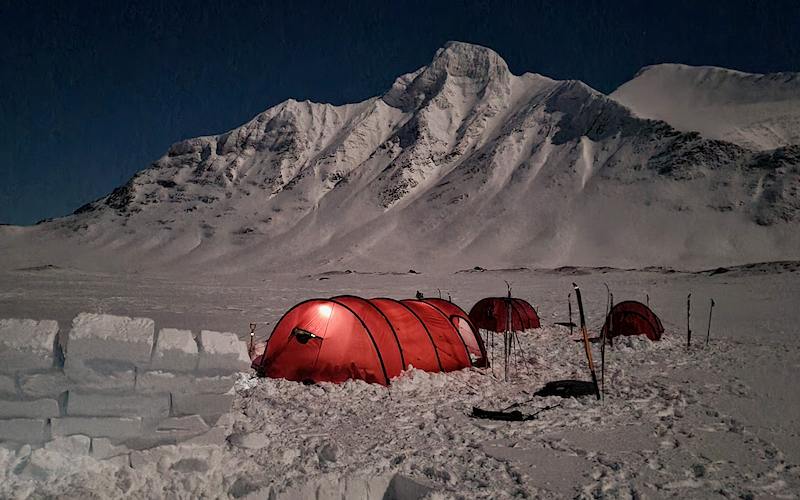
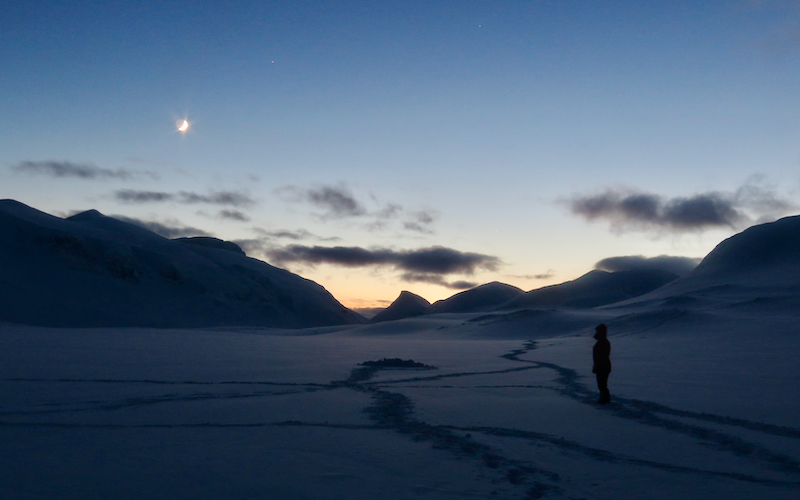
Imagine a starry winter evening, in the mountain in total silence. If you turn off your headlamp, you can see the faint northern lights dancing in the sky. Your breath turns to smoke, and it’s time to go to bed after a long day on the skis. Someone who knows what it’s like to sleep outside in the cold is Mirja Andersson, a mountain leader and one of the founders of Laponia Adventures.
What kind of sleeping system do you use, that meaning sleeping bag and sleeping mat?
– I usually use two sleeping mats. I actually don’t have a special one for winter. I just take my inflatable one that I usually use on summer hikes. Then I put a foam mat on top, I think that keeps me warmer than having it underneath.
– When it comes to sleeping bags, you shouldn’t choose one to that is to cold
– When it comes to sleeping bags, you shouldn’t choose one to that is to cold! It’s really not fun to spend the whole day worrying about being cold again the next night. This is not the time to go light. After all, you’re traveling with a pulka in winter and can manage to bring a few extra kilos. I have a down sleeping bag, but that’s something you have to decide for yourself. If you’re a beginner, it’s better to go with synthetic, which keeps you warm even when it’s a little bit wet. You might not have the experience and know how to keep everything dry. In that way, down can be a risky choice; if you get wet or have a night with a lot of condensation, it becomes a lump. A synthetic sleeping bag is also easier to wash, which is an important reason why we use synthetic bags in our company, for rentals and tours.
What clothes do you wear when sleeping?
– Some people say that you should basically sleep naked in a sleeping bag, but that’s not something I recommend… I usually wear a warmer base layer, maybe a thin down jacket or a vest if it’s very cold. I wait to change until the last possible moment, so the sleep base layer is as dry as possible.
– A hat is super important! Mittens, on the other hand, are optional. I sleep without, but others might prefer to sleep with a thin mitten on. Then I have my secret socks, the sleeping socks, which never see day light. I only wear them inside the sleeping bag. I have a system for longer tours, both summer and winter where I use three pairs of socks: a set of skiing or hiking socks, a pair of camp socks that I change into when I arrive, and my sleeping socks. If I have to get up to pee in the middle of the night, I take off my sleeping socks to always keep them dry. That works well for me. And it’s also a good prevention for trench foot.
Then I have my secret socks, the sleeping socks, which never see day light. I only wear them inside the sleeping bag.
Do you do anything special, besides changing clothes, before you crawl into the sleeping bag?
– Yes, it’s important to make sure you’re warm when you go to bed! The sleeping bag isn’t warm on its own, it just insulates. If you crawl in cold and damp, you’ll be cold. To generate heat, I run a bit or do sit-ups.
– I got it explained to me so well from a former colleague that you should make sure to have a fire within you. You should have eaten properly so there is energy to take from. You start your fire with small sticks, carbohydrates, continue with larger branches, protein, and to stay warm all night, a big log, that’s the fat. So either I eat a substantial late dinner or an early dinner and a snack in the evening. It could be a sandwich and a warm cup of chocolate. Energy is incredibly important to avoid freezing.
– Water is also important, but especially cold water can be hard to drink in winter. It has happened twice actually that I have been lying in my sleeping bag shivering, and not able to sleep. Finally I sat up and took a few sips of water, then I could sleep well without freezing. You just have to be careful not to drink too much too late, otherwise, you have to get up to pee during the night. But if you do wake up in the middle of the night and need to pee, it’s much better to get up than to lie there tossing and turning.
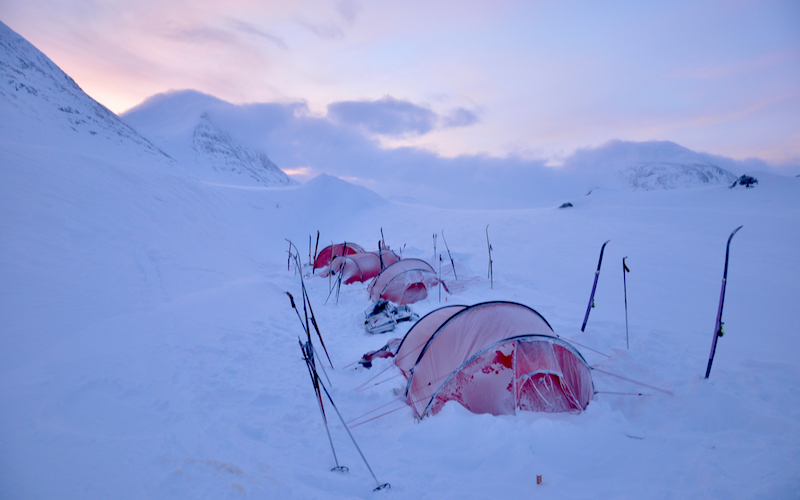
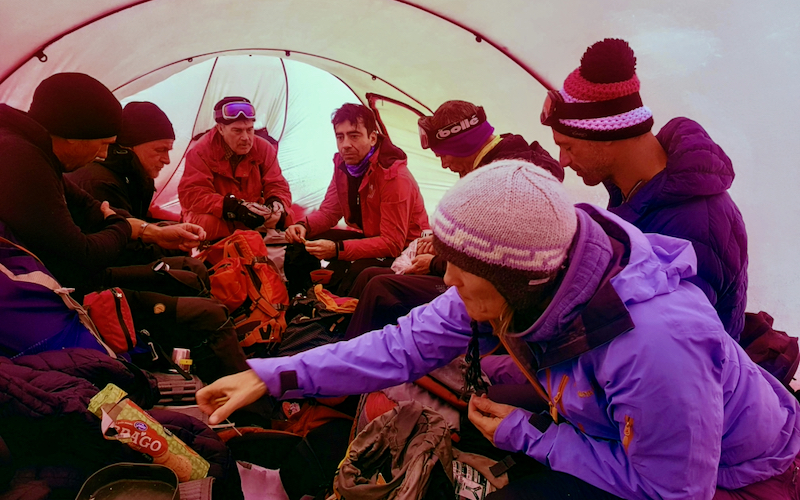
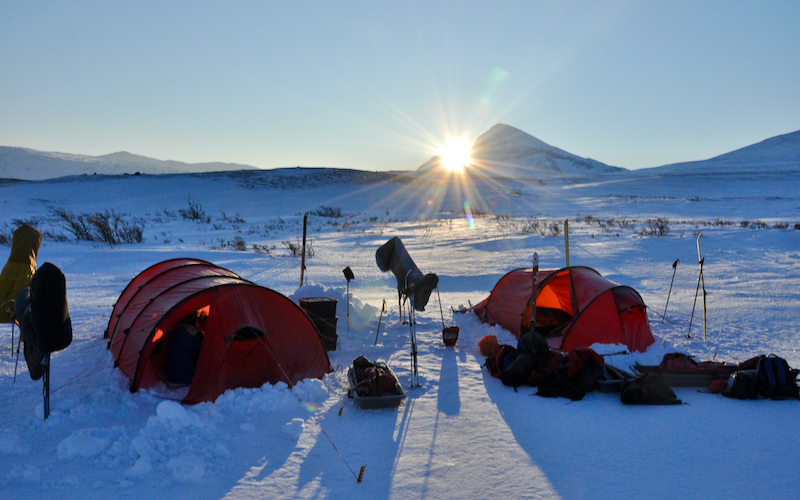
Do you have any other tips for a good night’s sleep outdoors?
– Yes, boil water in the evening and pour it into two half-liter Nalgene bottles. I put them in my secret socks until it’s time to go to bed, then into the sleeping bag. That way I have two mini heaters during the night, one at my feet and one at my torso. But make sure they are screwed on tightly…
– They have a double function because in the morning I have a liter of water I can start drinking right away. It’s a good start to the day’s water intake. And a bonus tip: I refill the Nalgene bottles in the morning with hot water, and put one in each ski boot to warm them up a bit before I put them on. It’s hard to put on stiff, frozen boots.
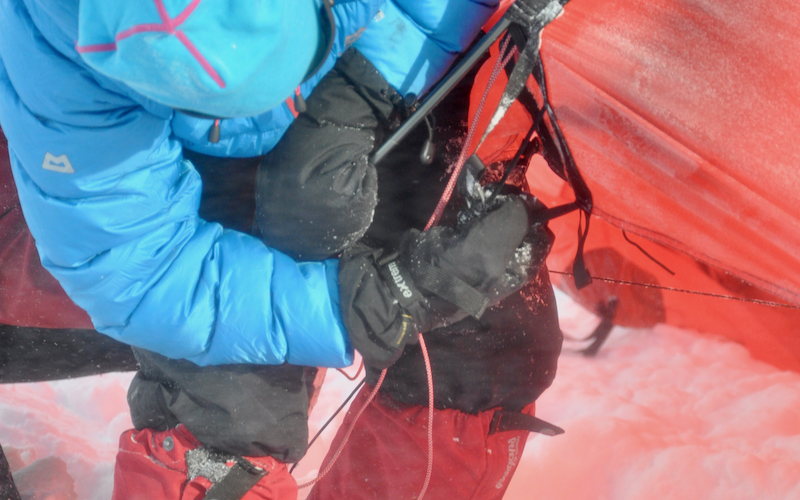
– Another tip for sleeping well is to prepare the campsite in the evening. I go around and check that everything is secured, all lines are tight, and that there are no loose items anywhere. That the pulka is next to the tent in a place I can find it even if it snows heavily during the night. I make sure that camp shoes and boots are not left unprotected in the outer-tent, in case snow drifts in. If it picks up wind during the night, I know I have secured everything and can sleep peacefully. In general, I always pretend that the wind could come at any time. That way I practice a behavior that will help me the day the storm actually arrives.
Interview and text: Cathrin Larsson
Quick facts Sleeping outdoors during winter
- Always test the equipment you plan to use before going on a longer tour in the mountains.
- If you feel unsure about your equipment or are afraid of being cold, pitch your tent in the garden first! Or choose a spot close to a parking lot or a cabin, so you can pack up and leave or sleep indoors if you change your mind during the night.
- Don’t forget a headlamp and extra batteries!
- Before buying a sleeping bag, read up on comfort temperatures to make sure the sleeping bag will keep you warm enough.
- Also, make sure to try the sleeping bag on with any layers you want to wear underneath, so you have enough space in it.
- The insulating ability of inflatable sleeping mats is measured in R-value. The higher the R-value, the warmer it will be. During winter, a sleeping pad with an R-value between 5-7 is recommended.
- If you have an inflatable sleeping mat for summer, it can of course be used as well. A tip to make it warmer is to place a foam sleeping mat on top of the inflatable one, that way it will be warmer.
Links Sleeping outdoors in winter
Would you like to go winter camping?

Join one of our winter camping tours in Sarek
If winter camping is new to you, maybe you would feel more relaxed going with a guide? Every year we offer at least one camping tour in Sarek, often more than one.

Rent tents, sleeping bags and much more from us
Rent what you are missing for a successful winter tour
Do you have any questions?
If you have any questions about how to rent camping equipment or don’t find what you are looking for.
Send an email to info@laponiaadventures.com
We are happy to help and will answer you as soon as we can.